

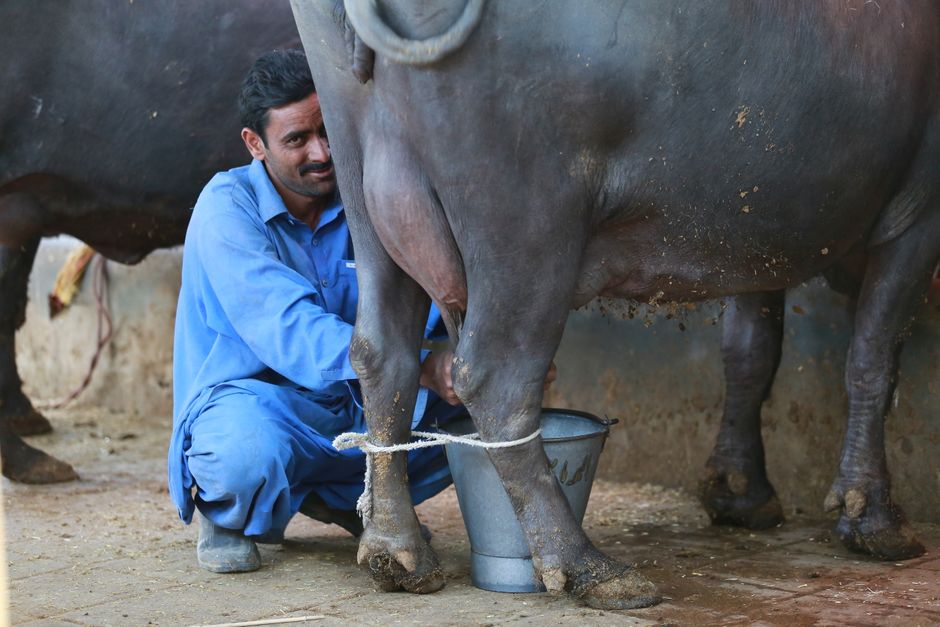
Photo by Imtiaz Ahmed on Pexels
The milking stool stands empty. Again.
Savitri devi from a small village in Haryana wipes sweat from her forehead after a failed milking session. Her buffaloes stand listlessly in the shed. One of them, Laxmi, refuses to give more than two litres, and the milk that comes out looks thin, watery, and has a slight reddish tinge. Savitri remembers how Laxmi used to give six litres easily, even in the summer heat. She knows something is wrong, but what exactly? The local vet calls it mastitis — an inflammation of the udder. It sounds technical, but for Savitri and thousands of smallholder farmers like her, it is just another day of lost income and extra worry.
Mastitis is not rare. It is the single most common disease in dairy cows and buffaloes across India, especially in the un organised sector where hygiene, nutrition and veterinary access remain patchy. Recent news about Mayank Cattle Food launching a new product called MAYANK UDDERSAFE for mastitis management has brought the issue back into the conversation. It is a reminder — mastitis is not a side issue. It is a core economic problem. A study by ICAR estimates it costs Indian dairy farmers over ₹12,000 crore annually in reduced yield, discarded milk and treatment costs. That is enough to buy 50,000一头 high-yielding calves — if the money were wisely used.
What mastitis looks like in Indian conditions
Mastitis is not one disease. It is a group of infections — bacterial, fungal or even due to physical trauma — that affect the mammary gland. In India, the usual suspects are Streptococcus agalactiae, Staphylococcus aureus and E. coli. The problem worsens in monsoon. Humid conditions, muddy sheds, poor drainage — all create perfect breeding grounds for pathogens. The disease manifests in two main forms: clinical and subclinical.
Clinical mastitis is the visible kind. You see it in the milk — clots, flakes, watery appearance, colour changes. The udder swells, gets hot and painful. The animal may develop fever and lose appetite. This is when most farmers finally call the vet. But by then, the damage is often done. Subclinical mastitis is sneakier. No visible changes in milk or udder. The cow appears normal. But milk yield drops by 10 to 20 percent. Somewhere, the immune system is quietly fighting an infection. That is where many smallholders miss the warning signs entirely.
The impact on small farms is serious. A single case of mastitis can wipe out the monthly profit from one animal. For households where milk income is the only regular cash flow — children's fees, medicine, daily groceries — this is a big shock. And when several animals in a 5 to 10 head herd get affected, the whole operation can stall.
Regional stress points across India
Mastitis risk is not the same everywhere. In Gujarat and Rajasthan, where summer temperatures regularly cross 45 degrees Celsius, heat stress weakens the animals' natural resistance. Dry, dusty conditions mean udders get clogged with grit during routine milking. In West Bengal and Odisha, the monsoon brings standing water in sheds. Cows stand in it all day, increasing chances of bacterial entry through the teat canal. In Haryana and Punjab, where most smallholders rely on shared milking sheds, poor sanitisation between animals spreads infection fast.
Another regional issue is the shift in housing patterns. In the 1990s, most villages had open grazing and open sheds. Now, with land getting scarce, many farms have moved to zero-grazing systems. That helps with feed control but increases contact time with dirty bedding. If straw or sawdust is not dried properly, it becomes a fungal hotspot. And fungal mastitis — rare ten years ago — is now appearing more often in confined herds.
There is no state that is untouched. But the severity differs. According to recent ICAR field surveys, prevalence of subclinical mastitis is above 40 percent in many smallholder herds in Uttar Pradesh, Bihar and Jharkhand. In cooperative sectors with regular dry cow therapy and milking shed audits — like in some parts of Maharashtra and Karnataka — it drops to 20 to 25 percent. The gap shows how simple management changes can make a real difference.
What farmers can do right now — no vet required yet
Preventing mastitis is cheaper and easier than treating it. You do not need expensive tools to start. Just a few disciplined habits at milking time.
- Always milk healthy animals first. Move infected ones to the end of the line. This stops cross contamination.
- Use a pre-dip. A simple solution of iodine or chlorhexidine before attachment kills surface germs. Even a dilute potassium permanganate solution works in a pinch.
- Stripping — gently milking out the first few streams — is non-negotiable. It flushes out infected milk and checks blockages.
- Dry cow therapy matters. Every animal should get an internal teat sealant or antibiotic (only after vet consultation) before entering the dry period. The udder is most vulnerable during these six weeks.
- Keep bedding clean and dry. Change it at least every second day. Wet dung bedding is the worst possible environment.
Teat condition is also a key indicator. Cracked or chapped teats are entry points for infection. In summer, apply a simple vaseline or neem oil based lubricant after milking. In monsoon, make sure udders dry fully before the animals lie down. A quick wipe with clean jute or cotton cloth is enough if resources are tight.
Record keeping helps catch early signs. Note daily yield and look for sudden drops. Even a 0.5 litre dip over two consecutive days is worth checking. Keep a log for just one animal at first — the highest yielding one — and watch it religiously for 30 days. Patterns will emerge. That is how many good dairy managers start.
Economic reality — mastitis and the milk price squeeze
Milk prices are rising in many states. Haryana just issued a warning that buffalo milk should not sell below ₹100 a litre. In Tamil Nadu, the Aavin issue has shown how fragile the balance is between producer and processor. But higher retail prices do not reach the farmer immediately. Mastitis makes that gap worse.
When mastitis strikes, two things happen. First, the milk yield drops. Second, the milk may get rejected by cooperatives or private chilling centres. Many chilling units now do a somatic cell count test. High counts mean the milk is from an inflamed udder and will be downgraded or rejected. That hits smallholders hardest — they have no buffer to absorb such losses.
Some farmers try to milk sick animals separately and sell the milk locally. That is dangerous. Not just for the buyer — mastitic milk has altered composition and can spoil faster. But the bigger issue is that it spreads infection. If the same bucket, string or cloth is used on multiple animals, you turn one case into five.
The real savings come from early detection. A subclinical case caught early can be managed with better hygiene alone. The same case left for two weeks may need antibiotic therapy and still lose 15 percent lifetime yield. So the question is not just medical — it is economic. Every rupee spent on clean bedding, proper milking technique and observation is repaid many times over in secure milk income.
When to call the vet — and when not to wait
Do not wait for the udder to swell before calling. If milk yield drops by more than 20 percent in two days, or if you see any clots or colour change, get help. Clinical mastitis needs prompt action — antibiotics, anti-inflammatories, supportive care. The vet will likely take a milk sample for culture and sensitivity. That is not luxury — it is how you know which drug will actually work. In many places, drug resistance is rising. What worked five years ago may not help today.
Avoid self-medication. There are many YouTube videos and local quack vendors selling powders and injections. They may reduce symptoms temporarily but often mask the real problem. A cow may look better but carry chronic infection. The udder tissue gets damaged. That animal will never be a high producer again.
Also remember that mastitis is not just a milk issue. In severe cases, the animal may develop septicaemia. The infection enters the bloodstream. That is life threatening. So if the cow stops eating, lies down constantly or has a fever above 103 degrees Fahrenheit, it is a medical emergency.
On the other hand, not every drop in yield means mastitis. Nutritional imbalances, heat stress, or lameness can also reduce milk. A good vet will look at the whole animal — body condition, foot health, feed intake — before jumping to结论.
There is good news on the policy front. The National Animal Disease Control Programme for Foot and Mouth Disease and Brucellosis has expanded to include some mastitis screening in pilot districts. If you are part of a cooperative or registered under PMGSY livestock schemes, check if your district includes udder health checks. Many states now run annual mastitis surveys. It is worth asking.
Mayank Uddersafe and similar products aim to support, not replace, these core practices. They are tools, not fixes. In the end, mastitis control is not about buying the most expensive product. It is about daily discipline. It is about watching your animals more closely. It is about knowing that the next drop in yield might not be just bad luck — it could be the start of something bigger.
Your milking stool might stand empty today. But with a few changes in how you milk, observe and record, it need not stay that way for long.


0 Comments