

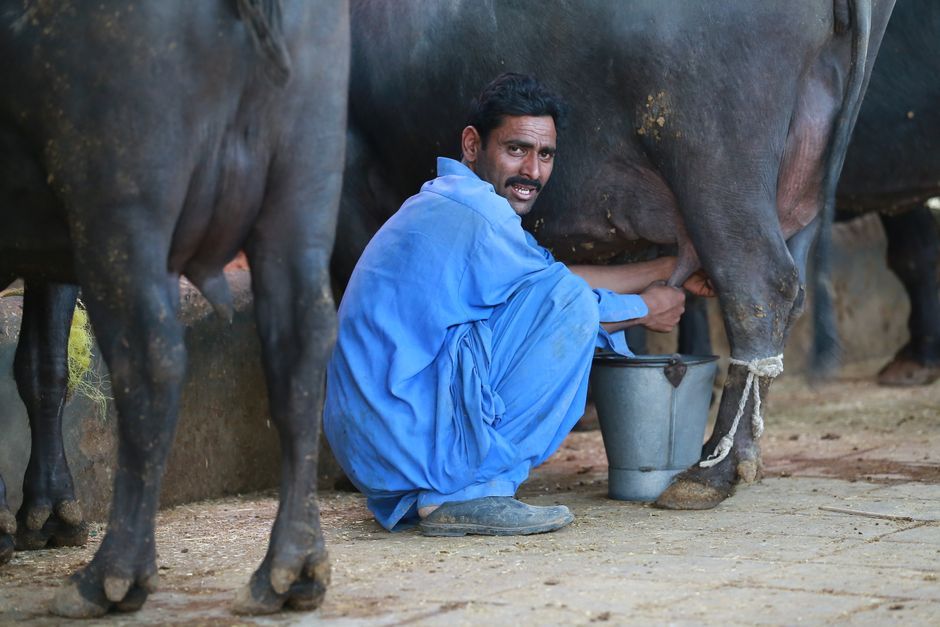
Photo by Imtiaz Ahmed on Pexels
Drive through any Haryana village these days and the chatter at the chai stall isn't about the weather. It's about the price of milk. Dairy farmers in the state have done something that got everyone's attention: they have collectively decided that buffalo milk will not sell for less than ₹100 per litre. And they aren't just asking nicely. Reports suggest there's a fine of ₹21,000 for anyone caught selling below that rate. That's a bold move, and it's worth understanding what it actually means for you, whether you milk two buffaloes or two hundred.
The Real Story Behind the ₹100 Rate Fix
Let's be clear about what happened. This isn't a government order. This is a farmer-led initiative, a collective decision by dairy farmers in Haryana to hold the line on prices. The logic is simple: input costs have shot up. Cattle feed, dry fodder, mineral mixtures, and even the labour you pay to manage the herd, everything costs more than it did two years ago. If the sale price doesn't cover these costs, you are effectively running at a loss every single day. The farmers who pushed this move are essentially saying that the market must pay a fair price, or they will stop selling at a loss.
The ₹21,000 fine part is the tricky bit. It's not a government penalty, so enforcing it isn't straightforward. It's more of a social contract among farmers, a way to stop one desperate seller from undercutting everyone else and dragging the price down. In many cooperative structures, this kind of peer pressure works because everybody knows everybody. But it also raises a question many of you might be asking: can they even do that? Legally, it's murky. Practically, it shows how frustrated the farming community has become with the gap between what the consumer pays and what the producer gets.
Why This Isn't Just a Haryana Story
This news is making headlines across the country because the ripples are already being felt elsewhere. Down south, Tamil Nadu's Aavin is reportedly looking at a hike of ₹5 to ₹7 per litre in procurement prices. Mumbai has seen retail milk prices go up by around ₹9 per litre. So what connects these dots? It's simple economics. When input costs rise uniformly across India, the price of milk has to move too. The only difference is who pushes the button first.
In Haryana, the farmers themselves are pushing the button. In Tamil Nadu, it's the cooperative federation adjusting its rates. But the underlying pressure is the same. Your cost per litre of milk production depends heavily on the breed, the feed quality, and the season. In summer, water stress and heat reduce yield, which pushes up the cost per litre. If the procurement price stays flat while your yield drops, you lose money on every single milking. That's the arithmetic no farmer can escape.
For dairy farmers in other states like Punjab, Gujarat, or Uttar Pradesh, this Haryana move is a signal. It shows that collective action can nudge prices. But it also warns of a risk. If you hold your milk back from the market waiting for a better price, you need proper storage and chilling capacity. If you don't have that, the milk spoils, and you lose more than you would have gained from a small price rise. So before you consider a similar protest in your district, check your cooling facilities first.
What This Means for Your Herd Economics
Let's talk numbers that matter to your bank balance. Suppose your buffalo gives 8 litres a day. At the old rate of, say, ₹85 a litre, you earned ₹680 daily. At ₹100, you earn ₹800. That's an extra ₹120 a day, or ₹3,600 a month, for just one animal if the rate actually holds. Multiply that by five buffaloes and you are looking at ₹18,000 more a month. That is a substantial sum for a smallholder family. It could cover the cost of good quality feed or pay for a proper vaccination schedule.
But here is the flip side. If the buyer, whether a private dudhwal or a cooperative, does not agree to pay ₹100, and you refuse to sell, you need to manage the surplus milk. Options include making paneer, ghee, or curd at home and selling those, but that requires time and market access. In many Haryana villages, the traditional ghee route works well. In peri-urban areas, direct home delivery to a fixed set of customers can fetch even better returns because you cut out the middleman. The point is, a price floor only works if you have a plan B for the milk.
Also, be careful not to over-interpret the fine. No farmer wants to fine a neighbour. The real goal is unity. In the long term, what will hold the price up is not a penalty, but a shortage of milk. When supply is tight, prices naturally rise. The current heat stress across North India is reducing yields, which does tighten supply. So the timing of this move is actually clever. The farmers have chosen a moment when milk is relatively scarce.
Practical Steps: What a Smart Farmer Should Do Right Now
Do not simply wait and watch. Here is what you can do, regardless of which state you are in.
- Check your chilling setup. If you plan to negotiate harder on price, you must be able to store milk safely for at least 24 hours. A simple bulk milk cooler, even a small one shared with two or three neighbours, gives you bargaining power.
- Track your own cost per litre. Write down what you spend on feed, fodder, electricity, labour, and veterinary care for a week. Divide that by the litres you produce. If that number is close to or above what you are being paid, you have a right to demand more. But you must know your number first.
- Improve feed efficiency, not just quantity. In this heat, buffaloes eat less and drink more. Make sure they have clean, cool water at all times. Add green fodder like maize or sorghum in the evening. A cooler, well-fed animal maintains its yield better than a stressed one.
- Watch for mastitis. With prices high, every litre counts. Check for swelling or heat in the udder, and check for flakes in the milk. Early detection saves the quarter. And always, always follow your vet's advice on treatment, don't self-medicate from the shop shelf.
- Talk to your cooperative. If you are a member, attend the next meeting. Ask them directly if they will match the ₹100 rate. The Haryana move has given you the language to have this conversation. Use it.
The Market Truth: Consumers Will Push Back
It would be dishonest to pretend this is all good news. When milk prices go up, consumption can dip. In urban India, many households are price-sensitive. If a litre of milk goes from ₹60 to ₹70, a middle-class family might trim their purchase from one litre to half a litre, or switch to cheaper powdered milk for tea. That is a demand risk you need to factor in.
This is why diversification matters. If you have surplus milk, explore making value-added products. In Haryana, there is a strong market for desi ghee, especially during the monsoon when people crave hot food. In metro-adjacent villages, delivering fresh, unpasteurised milk to a small set of regular customers at a premium rate is a growing trend. It is more work, but the margin is better.
Also remember that the price you get at the village gate is only one part of the equation. The other part is herd health. A healthy animal produces cheaper milk. This is the boring, unglamorous truth of dairying. Regular deworming, timely vaccination against FMD and brucellosis, and good hygiene in the shed do more for your profit than any price hike. A cow with subclinical mastitis produces 10-15 percent less milk and you often don't even see it. That loss eats into the gain from this price rise.
When to Call the Vet: Don't Let Health Ruin Profit
Now that you are fighting for a better price, do not gamble it away by cutting corners on animal health. If you see any of these signs, call your veterinarian promptly. Do not wait for the situation to worsen.
Call the vet if you notice sudden drops in milk yield, visible swelling in the udder, milk that looks watery, clotted, or blood-tinged, or an animal that is off-feed and dull. Also call if you see any skin lesions that look like lumps, especially in regions where lumpy skin disease has been reported, as this can cut milk production drastically and affect your income for weeks. Likewise, if an animal aborts, that is a veterinary emergency, do not just chalk it up to bad luck. There are diseases like brucellosis that can hide in the herd and cause repeated losses.
The Indian dairy sector is at a crossroads. Farmers are learning to speak the language of commerce. This ₹100 per litre movement in Haryana is not just about a number. It is about dignity and survival. Whether you agree with the fine or not, the conversation has started. Your job is to be ready for it, to know your costs, to protect your herd's health, and to sell smart. That is how you turn a headline into a better livelihood.


0 Comments